
A trade website has one job, and it is not to look impressive. It is to convince somebody who already found you, from a van, a recommendation or a search, that you are the firm worth ringing rather than the other two open in the next tab.
Most trade sites fail at that for the same handful of reasons, and almost none are design. Below is what a working one contains, what breaks the ones that do not, and the condition we put on every site we build.
Tradesman website design is the same job whether you fit kitchens or lay drives: prove you are real, show the work, and make the phone number the easiest thing on the page to tap.
A tradesman’s website should answer four questions fast: what work you do, where you do it, what your finished work looks like, and how to reach you today. Everything else is decoration.
The reason to be blunt is that these visitors are not browsing. They arrived with a job in mind, they will give you under a minute, and most are on a phone in poor light. A site that opens with a full-width video and a slogan has spent that minute saying nothing.
The second job is to give search engines something to rank, which means a page per service and a page per real area you cover. That is covered in seo for builders.
Not in a contact form. A large share of trade enquiries are phone calls made within seconds of landing.
Not one services page listing six things. Each page is a separate chance to rank and a separate thing to send a customer.
Stock photography is recognised instantly and it costs you trust. Twenty honest phone photographs beat four purchased ones.
Towns, not a radius. People check whether you come to them before they check anything else.
Name, phone, what the job is, roughly where. Every additional field costs you enquiries.
Pulled through or pasted with the name and town. A review that names the job is worth several that do not.
Trade sites are slow because they are full of six megabyte images straight off a phone. Compressing them beats a redesign and costs an afternoon.
Insurance, accreditations, how long you have been going, a face. Homeowners are letting a stranger into the house.
Almost all the websites for tradesmen we are asked to look at fail in one of three ways, and none of them is a design fault.
The homepage opens with the firm’s history because the firm is proud of it. The customer wanted to know if you do flat roofs in Lewes.
A single scrolling page with everything on it can be ranked for one term at most, and it makes every enquiry generic. There is nothing to send a customer who asked specifically about bathrooms.
The last job on it is three years old and the phone number is the old one. An out of date site suggests an out of date business.
This is the condition we attach to every site we build, and it is worth explaining.
We hand-code the layout rather than assembling it in a page builder, which makes the site far lighter and faster, and page speed is a genuine ranking factor on mobile where most of this traffic sits. The risk in doing it that way is not search. It is that the owner ends up unable to change anything without ringing us.
So the rule is: hardcode the layout, never the content. Your phone number, opening hours, copy, images and their alt text, service names, prices where shown, testimonials and the address your enquiries are sent to all live in labelled editable fields. You get your own admin login, a recorded walkthrough, and a one page note on how to change the common things.
If you cannot change your own phone number without ringing your web designer, the build is not finished. The wider service is our web design service.
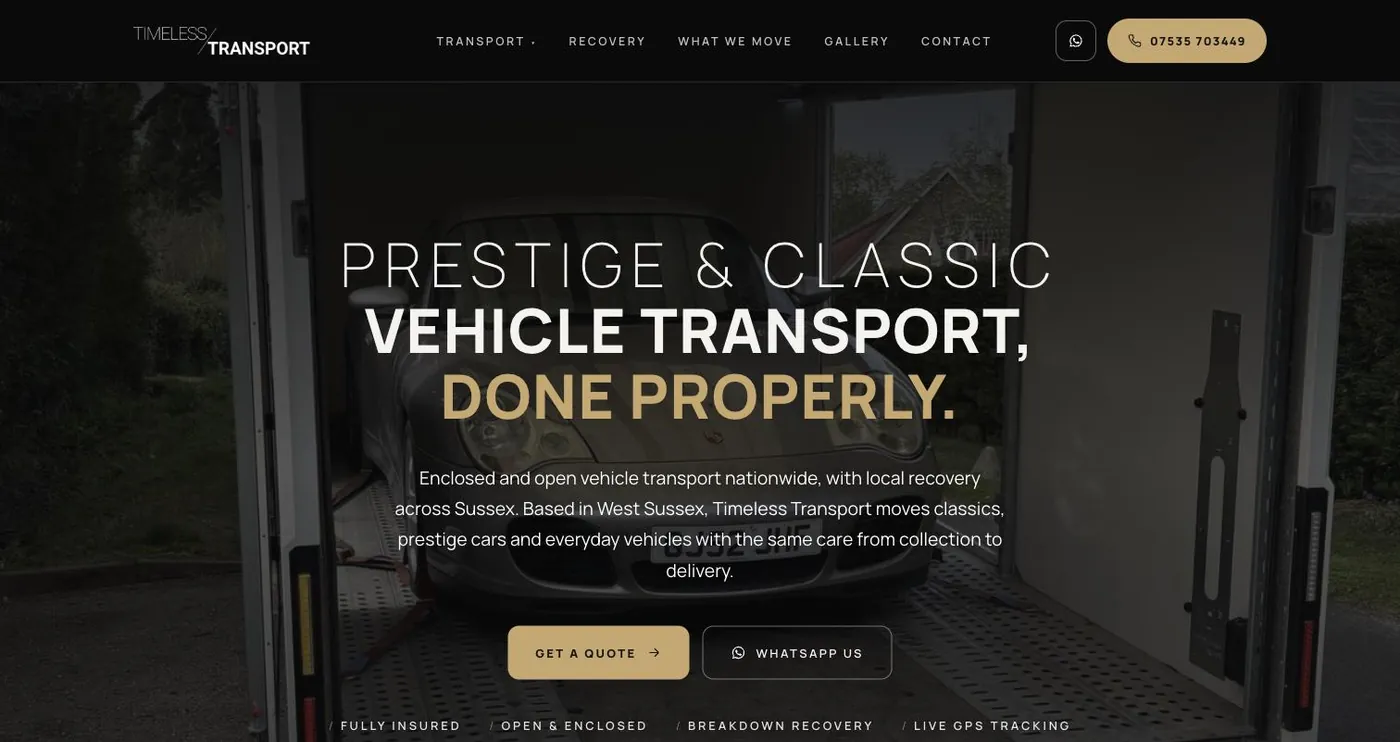
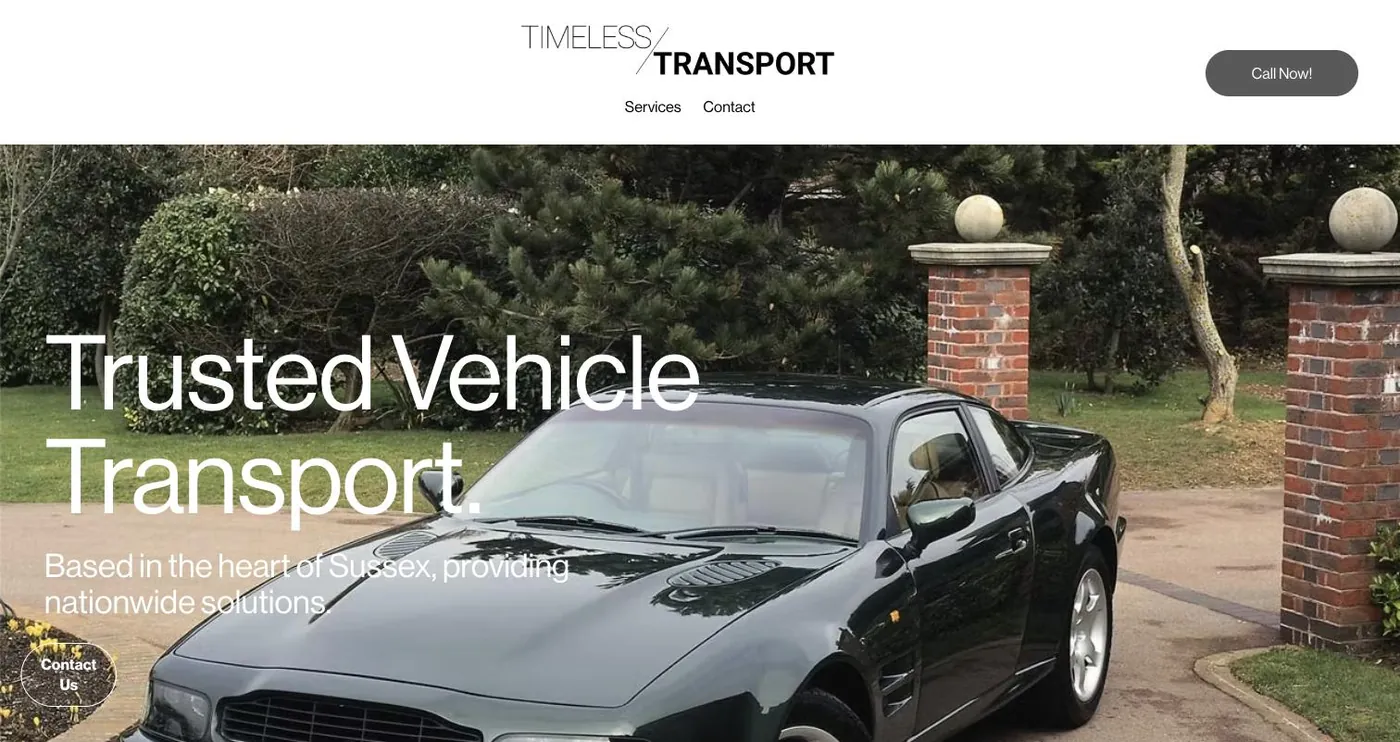
BeforeAfter
Timeless Transport, rebuilt on the same domain. The full write-up is on the Timeless Transport case study.
Yes, because word of mouth now ends in a search. Somebody is given your name and looks you up before ringing. What they find is either a reason to call or a reason to ask for a second name.
If money is tight, a plain self-built site with the eight things above beats an expensive one without them. The list matters more than who builds it.
One per type of work, one per real area you cover, an about page with a face on it, and a contact page. For most firms that is between eight and fifteen. Forty spun town pages is a different thing and it does not work any more.
Rarely. A site converts the traffic it is sent. Something still has to send it, which is search, ads or your van. That side of it is construction lead generation.
Give us your website and the work you want more of. We will go through it on a phone the way a customer would, and tell you the three things costing you enquiries. Half an hour, no charge.
Knox Growth builds websites for tradesmen across the UK and is a construction marketing agency working with building and trade firms. If roofing is your trade, start with marketing for roofing companies.